I Am Rich is a discontinued 2008 mobile app for iPhones which had minimal function and was priced at US$999.99 (equivalent to $1,495 in 2025). The app was pulled from the App Store less than 24 hours after its launch. Receiving negative reviews from critics, only eight copies were sold. In the years since, several similar applications have been released at lower prices. == Overview == I Am Rich was developed as a joke by German software developer, Armin Heinrich, after he saw iPhone users complaining about software priced above $0.99. The app only showed a glowing red gem and an icon that, when pressed, displayed the following mantra in large text: I am richI deserv [sic] itI am good,healthy & successful Heinrich told The New York Times that "I regard it as art. I did not expect many people to buy it and did not expect all the fuss about it." The application is described as "a work of art with no hidden function at all", with its only purpose being to show other people that they were able to afford it. Vox writer Zachary Crockett called it "the ultimate Veblen good in app form". == Release == Heinrich released and distributed I Am Rich through the App Store on 5 August 2008. The app was sold for US$999.99 (equivalent to $1,495 in 2025), €799.99 (equivalent to €1,078 in 2023), and £599.99 (equivalent to £978.12 in 2025)—the highest prices Apple allowed for App Store content. Without explanation, the application was removed from the App Store by Apple less than a day after its release. === Purchases === Eight people bought the application, at least one of whom claimed to have done so accidentally. Six US sales and two European sales netted $5,600 for Heinrich and $2,400 for Apple (respectively equivalent to $8,374 and $3,589 in 2025). In correspondence with the Los Angeles Times, Heinrich told the newspaper that Apple had refunded two purchasers of his app, and that he was happy to not have dissatisfied customers. == Reception == Discussing the app on the website Silicon Alley Insider, Dan Frommer described the program as a "scam", "worthless", and finally "a joke that smells like a scammy rip-off" on August 5, 6, and 8, respectively. Without purchasing the app, Fox News's Paul Wagenseil guessed that the secret mantra was "German for 'Sucker!'" (Heinrich is German). Wired's Brian X. Chen described I Am Rich as a waste of money to "prove you're a jerk", and contrasted the expenditure with donating to cancer foundations and Third World countries. Heinrich told the Los Angeles Times's Mark Milian that he had received correspondence from satisfied customers: "I've got e-mails from customers telling me that they really love the app [... and that they had] no trouble spending the money". In an interview with The New York Times, though, he told of receiving many insulting emails and telephone messages. == Similar applications == The next year, Heinrich released I Am Rich LE. Priced at US$9.99 (equivalent to $14.99 in 2025), the new app has several new features (including a calculator, "help system", and the "famous mantra without the spelling mistakes") to meet Apple's requirement that apps have "definable content". Some customers were disappointed by the new functionality, poorly rating the app due to its ostensible improvements. On 23 February 2009, CNET Asia reported on the "conceptually similar" app, I Am Richer, developed by Mike DG for Google's Android. The app was released on the Android Market for US$200 (equivalent to $300.14 in 2025), a limit imposed by Google, who had no objection to the application. With the same name, the I Am Rich that was released on the Windows Phone Marketplace on 22 December 2010, was developed by DotNetNuzzi. Described by MobileCrunch as equally useless as the original, this app cost US$499.99 (equivalent to $738.2 in 2025), the price cap imposed by Microsoft.
Big data
Big data primarily refers to data sets that are too large or complex to be dealt with by traditional data-processing software. Data with many entries (rows) offers greater statistical power, while data with higher complexity (more attributes or columns) may lead to a higher false discovery rate. Big data analysis challenges include capturing data, data storage, data analysis, search, sharing, transfer, visualization, querying, updating, information privacy, and data sources. Big data was originally associated with three key concepts: volume, variety, and velocity. The analysis of big data that have only volume, velocity, and variety can pose challenges in sampling. A fourth concept, veracity, which refers to the level of reliability of data, was thus added. Without sufficient investment in expertise to ensure big data veracity, the volume and variety of data can produce costs and risks that exceed an organization's capacity to create and capture value from big data. Current usage of the term big data tends to refer to the use of predictive analytics, user behavior analytics, or certain other advanced data analytics methods that extract value from big data, and seldom to a particular size of data set. "There is little doubt that the quantities of data now available are indeed large, but that's not the most relevant characteristic of this new data ecosystem." Analysis of data sets can find new correlations to "spot business trends, prevent diseases, combat crime and so on". Scientists, business executives, medical practitioners, advertising and governments alike regularly meet difficulties with large datasets in areas including Internet searches, fintech, healthcare analytics, geographic information systems, urban informatics, and business informatics. Scientists encounter limitations in e-Science work, including meteorology, genomics, connectomics, complex physics simulations, biology, and environmental research. The size and number of available data sets have grown rapidly as data is collected by devices such as mobile devices, cheap and numerous information-sensing Internet of things devices, aerial (remote sensing) equipment, software logs, cameras, microphones, radio-frequency identification (RFID) readers and wireless sensor networks. The world's technological per-capita capacity to store information has roughly doubled every 40 months since the 1980s; as of 2012, every day 2.5 exabytes (2.17×260 bytes) of data are generated. Based on an IDC report prediction, the global data volume was predicted to grow exponentially from 4.4 zettabytes to 44 zettabytes between 2013 and 2020. By 2025, IDC predicts there will be 163 zettabytes of data. According to IDC, global spending on big data and business analytics (BDA) solutions is estimated to reach $215.7 billion in 2021. Statista reported that the global big data market is forecasted to grow to $103 billion by 2027. In 2011 McKinsey & Company reported, if US healthcare were to use big data creatively and effectively to drive efficiency and quality, the sector could create more than $300 billion in value every year. In the developed economies of Europe, government administrators could save more than €100 billion ($149 billion) in operational efficiency improvements alone by using big data. And users of services enabled by personal-location data could capture $600 billion in consumer surplus. One question for large enterprises is determining who should own big-data initiatives that affect the entire organization. Relational database management systems and desktop statistical software packages used to visualize data often have difficulty processing and analyzing big data. The processing and analysis of big data may require "massively parallel software running on tens, hundreds, or even thousands of servers". What qualifies as "big data" varies depending on the capabilities of those analyzing it and their tools. Furthermore, expanding capabilities make big data a moving target. "For some organizations, facing hundreds of gigabytes of data for the first time may trigger a need to reconsider data management options. For others, it may take tens or hundreds of terabytes before data size becomes a significant consideration." == Definition == The term big data has been in use since the 1990s, with some giving credit to John Mashey for popularizing the term. Big data usually includes data sets with sizes beyond the ability of commonly used software tools to capture, curate, manage, and process data within a tolerable elapsed time. Big data philosophy encompasses unstructured, semi-structured and structured data; however, the main focus is on unstructured data. Big data "size" is a constantly moving target; as of 2012 ranging from a few dozen terabytes to many zettabytes of data. Big data requires a set of techniques and technologies with new forms of integration to reveal insights from datasets that are diverse, complex, and of a massive scale. Variability is often included as an additional quality of big data. A 2018 definition states "Big data is where parallel computing tools are needed to handle data", and notes, "This represents a distinct and clearly defined change in the computer science used, via parallel programming theories, and losses of some of the guarantees and capabilities made by Codd's relational model." In a comparative study of big datasets, Kitchin and McArdle found that none of the commonly considered characteristics of big data appear consistently across all of the analyzed cases. For this reason, other studies identified the redefinition of power dynamics in knowledge discovery as the defining trait. Instead of focusing on the intrinsic characteristics of big data, this alternative perspective pushes forward a relational understanding of the object claiming that what matters is the way in which data is collected, stored, made available and analyzed. === Big data vs. business intelligence === The growing maturity of the concept more starkly delineates the difference between "big data" and "business intelligence": Business intelligence uses applied mathematics tools and descriptive statistics with data with high information density to measure things, detect trends, etc. Big data uses mathematical analysis, optimization, inductive statistics, and concepts from nonlinear system identification to infer laws (regressions, nonlinear relationships, and causal effects) from large sets of data with low information density to reveal relationships and dependencies, or to perform predictions of outcomes and behaviors. == Characteristics == Big data can be described by the following characteristics: Volume The quantity of generated and stored data. The size of the data determines the value and potential insight, and whether it can be considered big data or not. The size of big data is usually larger than terabytes and petabytes. Variety The type and nature of the data. Earlier technologies like RDBMSs were capable to handle structured data efficiently and effectively. However, the change in type and nature from structured to semi-structured or unstructured challenged the existing tools and technologies. Big data technologies evolved with the prime intention to capture, store, and process the semi-structured and unstructured (variety) data generated with high speed (velocity), and huge in size (volume). Later, these tools and technologies were explored and used for handling structured data also but preferable for storage. Eventually, the processing of structured data was still kept as optional, either using big data or traditional RDBMSs. This helps in analyzing data towards effective usage of the hidden insights exposed from the data collected via social media, log files, sensors, etc. Big data draws from text, images, audio, video; plus it completes missing pieces through data fusion. Velocity The speed at which the data is generated and processed to meet the demands and challenges that lie in the path of growth and development. Big data is often available in real-time. Compared to small data, big data is produced more continually. Two kinds of velocity related to big data are the frequency of generation and the frequency of handling, recording, and publishing. Veracity The truthfulness or reliability of the data, which refers to the data quality and the data value. Big data must not only be large in size, but also must be reliable in order to achieve value in the analysis of it. The data quality of captured data can vary greatly, affecting an accurate analysis. Value The worth in information that can be achieved by the processing and analysis of large datasets. Value also can be measured by an assessment of the other qualities of big data. Value may also represent the profitability of information that is retrieved from the analysis of big data. Variability The characteristic of the changing formats, structure, or sources of big data. Big data can include structured, unstructured,
Enterprise cognitive system
Enterprise cognitive systems (ECS) are part of a broader shift in computing, from a programmatic to a probabilistic approach, called cognitive computing. An Enterprise Cognitive System makes a new class of complex decision support problems computable, where the business context is ambiguous, multi-faceted, and fast-evolving, and what to do in such a situation is usually assessed today by the business user. An ECS is designed to synthesize a business context and link it to the desired outcome. It recommends evidence-based actions to help the end-user achieve the desired outcome. It does so by finding past situations similar to the current situation, and extracting the repeated actions that best influence the desired outcome. While general-purpose cognitive systems can be used for different outputs, prescriptive, suggestive, instructive, or simply entertaining, an enterprise cognitive system is focused on action, not insight, to help in assessing what to do in a complex situation. == Key characteristics == ECS have to be: Adaptive: They must learn as information changes, and as goals and requirements evolve. They must resolve ambiguity and tolerate unpredictability. They must be engineered to feed on dynamic data in real time, or near real time. In the Enterprise, near-real time learning from data requires an agile information federation approach to ingest incremental data updates as they occur, and an unsupervised learning approach to ensure that new best practice is leveraged across the organization in a timely manner. Interactive: They must interact easily with users so that those users can define their needs comfortably. They may also interact with other processors, devices, and Cloud services, as well as with people. In the Enterprise, interactions are controlled via existing workflows and UIs. Therefore, embedding best practices directly into these existing interfaces, in the context of a specific step, is critical to ensure maximum end-user adoption. Iterative and stateful: They must aid in defining a problem by asking questions or finding additional source input if a problem statement is ambiguous or incomplete. They must “remember” previous interactions in a process and return information that is suitable for the specific application at that point in time. In the Enterprise, business context is often structured by a business process, and therefore sufficiently data-rich to make relevant recommendations without significant iterations from the end-user. A stateful memory of overall interactions across communication channels is critical for understanding of context, as a static profile will not capture intent and outcome potential the way behavior does. Contextual: They must understand, identify, and extract contextual elements such as meaning, syntax, time, location, appropriate domain, regulations, user's profile, process, task and goal. They may draw on multiple sources of information, including both structured and unstructured digital information, as well as sensory inputs (visual, gestural, auditory, or sensor-provided). In the Enterprise, Context is fragmented and must be aggregated across data types, sources, and locations. In most business environments, such data is captured in existing enterprise information systems, and the effort is linked to quickly source and unify such information. It is rare to have to directly process sensor, audio or visual data in real-time as direct input into the enterprise cognitive system. Instead, these data types are captured by Enterprise Applications and pre-processed into a binary or text format prior to consumption by the System. == Business applications powered by an ECS == Bottlenose – trends and brands monitoring Cybereason – security threat monitoring Dataminr – social media monitoring
AIXI
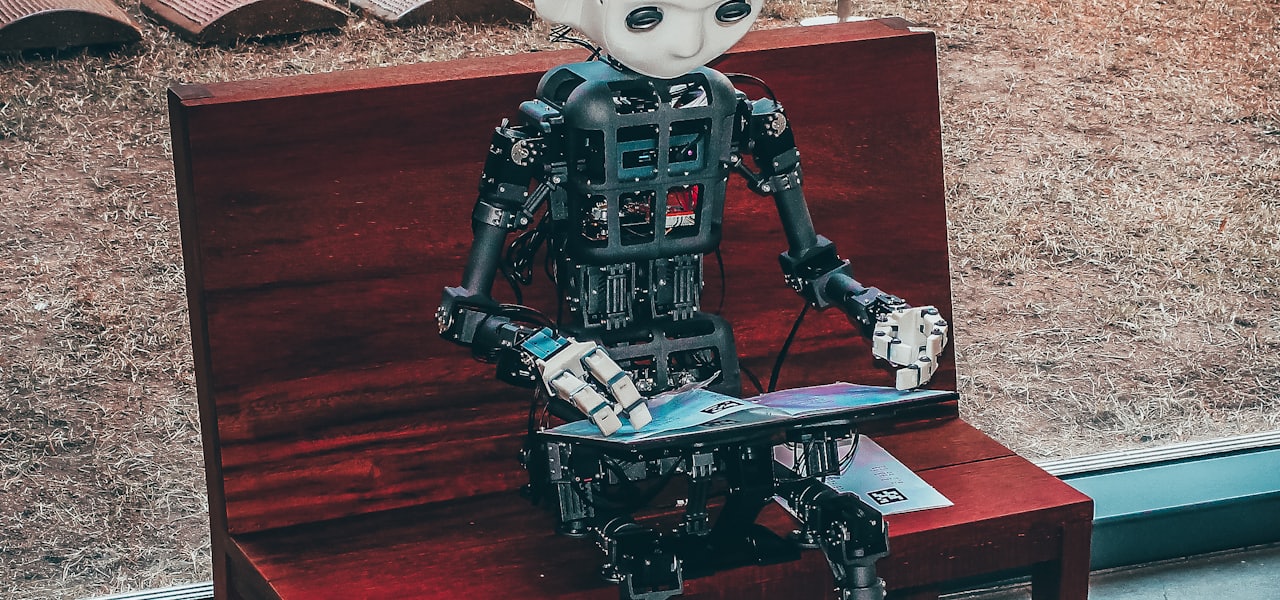
AIXI is a theoretical mathematical formalism for artificial general intelligence. It combines Solomonoff induction with sequential decision theory. AIXI was first proposed by Marcus Hutter in 2000 and several results regarding AIXI are proved in Hutter's 2005 book Universal Artificial Intelligence. AIXI is a reinforcement learning (RL) agent. It maximizes the expected total rewards received from the environment. Intuitively, it simultaneously considers every computable hypothesis (or environment). In each time step, it looks at every possible program and evaluates how many rewards that program generates depending on the next action taken. The promised rewards are then weighted by the subjective belief that this program constitutes the true environment. This belief is computed from the length of the program: longer programs are considered less likely, in line with Occam's razor. AIXI then selects the action that has the highest expected total reward in the weighted sum of all these programs. == Etymology == According to Hutter, the word "AIXI" can have several interpretations. AIXI can stand for AI based on Solomonoff's distribution, denoted by ξ {\displaystyle \xi } (which is the Greek letter xi), or e.g. it can stand for AI "crossed" (X) with induction (I). There are other interpretations. == Definition == AIXI is a reinforcement learning agent that interacts with some stochastic and unknown but computable environment μ {\displaystyle \mu } . The interaction proceeds in time steps, from t = 1 {\displaystyle t=1} to t = m {\displaystyle t=m} , where m ∈ N {\displaystyle m\in \mathbb {N} } is the lifespan of the AIXI agent. At time step t, the agent chooses an action a t ∈ A {\displaystyle a_{t}\in {\mathcal {A}}} (e.g. a limb movement) and executes it in the environment, and the environment responds with a "percept" e t ∈ E = O × R {\displaystyle e_{t}\in {\mathcal {E}}={\mathcal {O}}\times \mathbb {R} } , which consists of an "observation" o t ∈ O {\displaystyle o_{t}\in {\mathcal {O}}} (e.g., a camera image) and a reward r t ∈ R {\displaystyle r_{t}\in \mathbb {R} } , distributed according to the conditional probability μ ( o t r t | a 1 o 1 r 1 . . . a t − 1 o t − 1 r t − 1 a t ) {\displaystyle \mu (o_{t}r_{t}|a_{1}o_{1}r_{1}...a_{t-1}o_{t-1}r_{t-1}a_{t})} , where a 1 o 1 r 1 . . . a t − 1 o t − 1 r t − 1 a t {\displaystyle a_{1}o_{1}r_{1}...a_{t-1}o_{t-1}r_{t-1}a_{t}} is the "history" of actions, observations and rewards. The environment μ {\displaystyle \mu } is thus mathematically represented as a probability distribution over "percepts" (observations and rewards) which depend on the full history, so there is no Markov assumption (as opposed to other RL algorithms). Note again that this probability distribution is unknown to the AIXI agent. Furthermore, note again that μ {\displaystyle \mu } is computable, that is, the observations and rewards received by the agent from the environment μ {\displaystyle \mu } can be computed by some program (which runs on a Turing machine), given the past actions of the AIXI agent. The only goal of the AIXI agent is to maximize ∑ t = 1 m r t {\displaystyle \sum _{t=1}^{m}r_{t}} , that is, the sum of rewards from time step 1 to m. The AIXI agent is associated with a stochastic policy π : ( A × E ) ∗ → A {\displaystyle \pi :({\mathcal {A}}\times {\mathcal {E}})^{}\rightarrow {\mathcal {A}}} , which is the function it uses to choose actions at every time step, where A {\displaystyle {\mathcal {A}}} is the space of all possible actions that AIXI can take and E {\displaystyle {\mathcal {E}}} is the space of all possible "percepts" that can be produced by the environment. The environment (or probability distribution) μ {\displaystyle \mu } can also be thought of as a stochastic policy (which is a function): μ : ( A × E ) ∗ × A → E {\displaystyle \mu :({\mathcal {A}}\times {\mathcal {E}})^{}\times {\mathcal {A}}\rightarrow {\mathcal {E}}} , where the ∗ {\displaystyle } is the Kleene star operation. In general, at time step t {\displaystyle t} (which ranges from 1 to m), AIXI, having previously executed actions a 1 … a t − 1 {\displaystyle a_{1}\dots a_{t-1}} (which is often abbreviated in the literature as a < t {\displaystyle a_{ Ameca is a robotic humanoid created in 2021 by Engineered Arts, headquarters in Falmouth, Cornwall, United Kingdom. The project commenced in February 2021, and the first public demonstration was at the CES 2022 show in Las Vegas. Ameca's appearance features grey rubber skin on the face and hands, and is specifically designed to appear genderless. In 2024, an Ameca unit was installed in Edinburgh in the UK to reside at the National Robotarium. Ameca generation 3 has been released and showcased at ICRA 2025 along with Ami. == History == The first generation of Ameca was developed at Engineered Arts headquarters in Falmouth, Cornwall, United Kingdom. The project started in February 2021, with the first video revealed publicly on 1 December 2021. Ameca gained widespread attention on Twitter and TikTok ahead of its first public demonstration at the Consumer Electronics Show 2022, where it was covered by CNET and other news outlets. In 2022, Ameca presented an Alternative Christmas message by British TV Channel 4 for Christmas Day. Ameca was associated with the Museum of the Future's robotic family, where it could interact with visitors. In 2024, an Ameca unit was installed in Edinburgh in the UK to reside at the National Robotarium. In January 2026, Ameca served as an ambassador for the European Space Agency (ESA) at the 18th European Space Conference. == Features == It is designed as a platform for further developing robotics technologies involving human-robot interaction. utilizes embedded microphones, binocular eye mounted cameras, a chest camera and facial recognition software to interact with the public. Interactions can be governed by either OpenAI's GPT-3 or human telepresence. It also features articulated motorized arms, fingers, neck and facial features. Ameca's appearance features grey rubber skin on the face and hands, and is specifically designed to appear genderless. == Public appearances == Computer History Museum, California Heinz Nixdorf MuseumsForum, Paderborn, Germany Copernicus Science Center, Warsaw, Poland Museum of the Future, Dubai Consumer Electronics Show 2022 Deutsches Museum Nuremberg OMR Festival 2022 Hosted by Vodafone GITEX 2022 International Conference on Robotics and Automation 2023 International Telecommunication Union AI for Good Global Summit 2023 Sphere (Not Ameca, Custom humanoid named Aura built on Ameca technology) Incremental heuristic search algorithms combine both incremental and heuristic search to speed up searches of sequences of similar search problems, which is important in domains that are only incompletely known or change dynamically. Incremental search has been studied at least since the late 1960s. Incremental search algorithms reuse information from previous searches to speed up the current search and solve search problems potentially much faster than solving them repeatedly from scratch. Similarly, heuristic search has also been studied at least since the late 1960s. Heuristic search algorithms, often based on A, use heuristic knowledge in the form of approximations of the goal distances to focus the search and solve search problems potentially much faster than uninformed search algorithms. The resulting search problems, sometimes called dynamic path planning problems, are graph search problems where paths have to be found repeatedly because the topology of the graph, its edge costs, the start vertex or the goal vertices change over time. So far, three main classes of incremental heuristic search algorithms have been developed: The first class restarts A at the point where its current search deviates from the previous one (example: Fringe Saving A). The second class updates the h-values (heuristic, i.e. approximate distance to goal) from the previous search during the current search to make them more informed (example: Generalized Adaptive A). The third class updates the g-values (distance from start) from the previous search during the current search to correct them when necessary, which can be interpreted as transforming the A search tree from the previous search into the A search tree for the current search (examples: Lifelong Planning A, D, D Lite). All three classes of incremental heuristic search algorithms are different from other replanning algorithms, such as planning by analogy, in that their plan quality does not deteriorate with the number of replanning episodes. == Applications == Incremental heuristic search has been extensively used in robotics, where a larger number of path planning systems are based on either D (typically earlier systems) or D Lite (current systems), two different incremental heuristic search algorithms. Artificial wisdom (AW) is an artificial intelligence (AI) system which is able to display the human traits of wisdom and morals while being able to contemplate its own “endpoint”. Artificial wisdom can be described as artificial intelligence reaching the top-level of decision-making when confronted with the most complex challenging situations. The term artificial wisdom is used when the "intelligence" is based on more than by chance collecting and interpreting data, but by design enriched with smart and conscience strategies that wise people would use. == Overview == The goal of artificial wisdom is to create artificial intelligence that can successfully replicate the “uniquely human trait[s]” of having wisdom and morals as closely as possible. Thus, artificial wisdom, must “incorporate [the] ethical and moral considerations” of the data it uses. There are also many significant ethical and legal implications of AW which are compounded by the rapid advances in AI and related technologies alongside the lack of the development of ethics, guidelines, and regulations without the oversight of any kind of overarching advisory board. Additionally, there are challenges in how to develop, test, and implement AW in real world scenarios. Existing tests do not test the internal thought process by which a computer system reaches its conclusion, only the result of said process. When examining computer-aided wisdom; the partnership of artificial intelligence and contemplative neuroscience, concerns regarding the future of artificial intelligence shift to a more optimistic viewpoint. This artificial wisdom forms the basis of Louis Molnar's monographic article on artificial philosophy, where he coined the term and proposes how artificial intelligence might view its place in the grand scheme of things. == Definitions == There are no universal or standardized definitions for human intelligence, artificial intelligence, human wisdom, or artificial wisdom. However, the DIKW pyramid, describes the continuum of relationship between data, information, knowledge, and wisdom, puts wisdom at the highest level in its hierarchy. Gottfredson defines intelligence as “the ability to reason, plan, solve problems, think abstractly, comprehend complex ideas, learn quickly, and learn from experience”. Definitions for wisdom typically include requiring: The ability for emotional regulation, Pro-social behaviors (e.g., empathy, compassion, and altruism), Self-reflection, “A balance between decisiveness and acceptance of uncertainty and diversity of perspectives, and social advising.” As previously defined, Artificial Wisdom would then be an AI system which is able to solve problems via “an understanding of…context, ethics and moral principles,” rather than simple pre-defined inputs or “learned patterns.” Some scientists have also considered the field of artificial consciousness. However, Jeste states that “…it is generally agreed that only humans can have consciousness, autonomy, will, and theory of mind.” An artificially wise system must also be able to contemplate its end goal and recognize its own ignorance. Additionally, to contemplate its end goal, a wise system must have a “correct conception of worthwhile goals (broadly speaking) or well-being (narrowly speaking)”. "Stephen Grimm further suggests that the following three types of knowledge are individually necessary for wisdom: first, "knowledge of what is good or important for well-being", second, "knowledge of one’s standing, relative to what is good or important for well-being", and third, "knowledge of a strategy for obtaining what is good or important for wellbeing."" == Problems == There are notable problems with attempting to create an artificially wise system. Consciousness, autonomy, and will are considered strictly human features. === Values === There are significant ethical and philosophical issues when attempting to create an intelligent or a wise system. Notably, whose moral values will be used to train the system to be wise. Differing moral values and prejudice can already be seen from various organizations and governments in artificial intelligence. Deployment strategies and values of Artificial Wisdom will conflict between leaders, companies, and countries. Nusbaum states, “When values are in conflict, leaders often make choices that are clever or smart about their own needs, but are often not wise.” === Ethics === Science fiction author Isaac Asimov realized the need to control the technology in the 1940s when he wrote the three laws of robotics as follows: A robot may not injure a human directly or indirectly. A robot must obey human’s orders. A robot should seek to protect its own existence. Additionally, the pace at which technology is rapidly advancing artificial intelligence and thus the need for artificial wisdom may “have outpaced the development of societal guidelines have raised serious questions about the ethics and morality of AI, and called for international oversight and regulations to ensure safety.” === Principal impossibility === One argument, coined by Tsai as the “argument against AW,” or AAAW, postulates the principal impossibility of Artificial Wisdom. The argument is based on the philosophical differences between practical wisdom, also called phronesis, and practical intelligence. Said difference isn’t in “selecting the correct means, but reasoning correctly about what ends to follow”. Tsai puts the argument into a logical proposition as follows: “(P1) An agent is genuinely wise only if the agent can deliberate about the final goal of the domain in which the agent is situated.” “(P2) An intelligent agent cannot deliberate about the final goal of the domain in which the agent is situated.” “(C1) An intelligent agent cannot be genuinely wise.” “(P3) An AW is, at its core, intelligent.” “(C2) An AW cannot be genuinely wise.”Ameca (robot)
Incremental heuristic search
Artificial wisdom